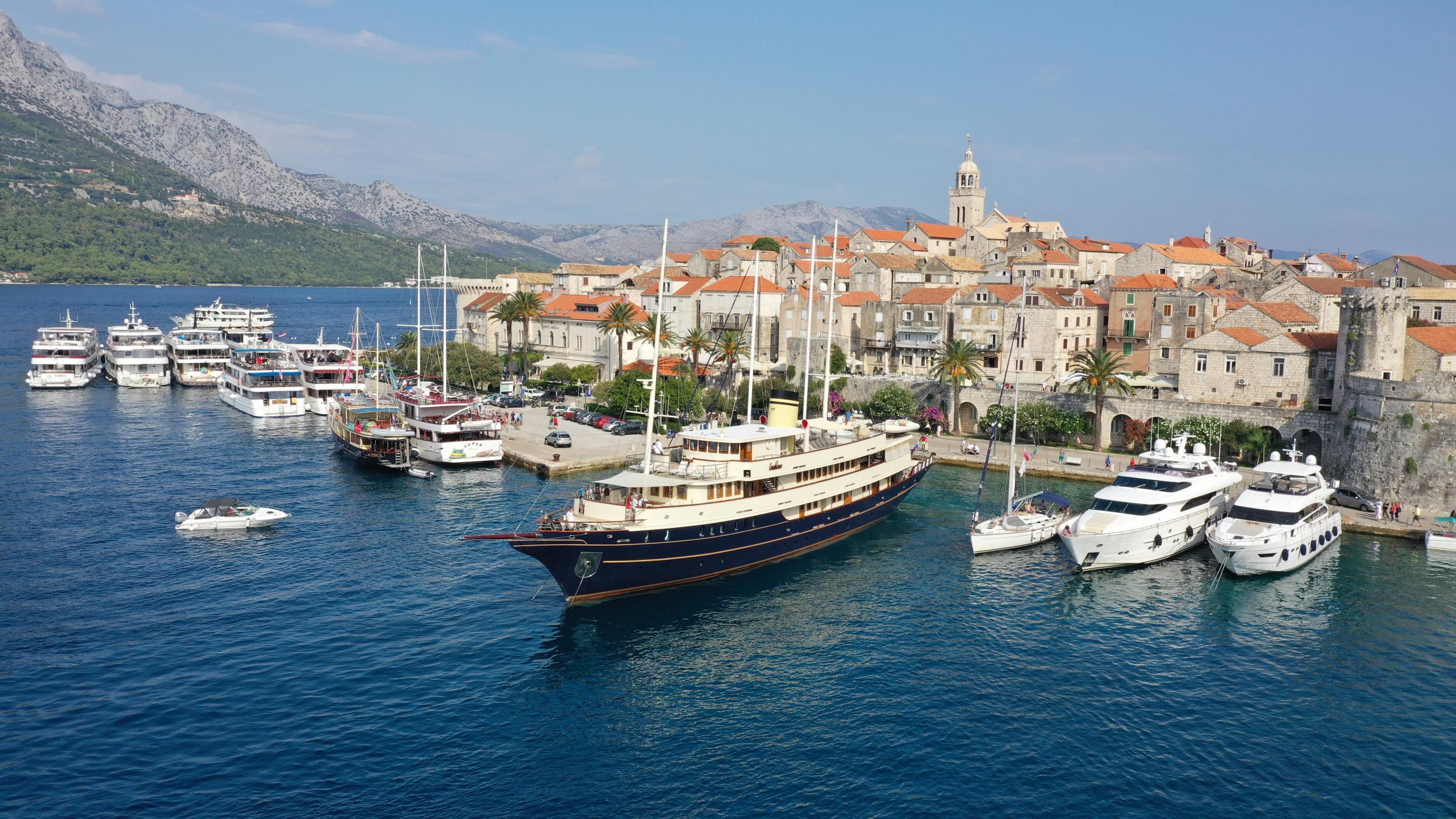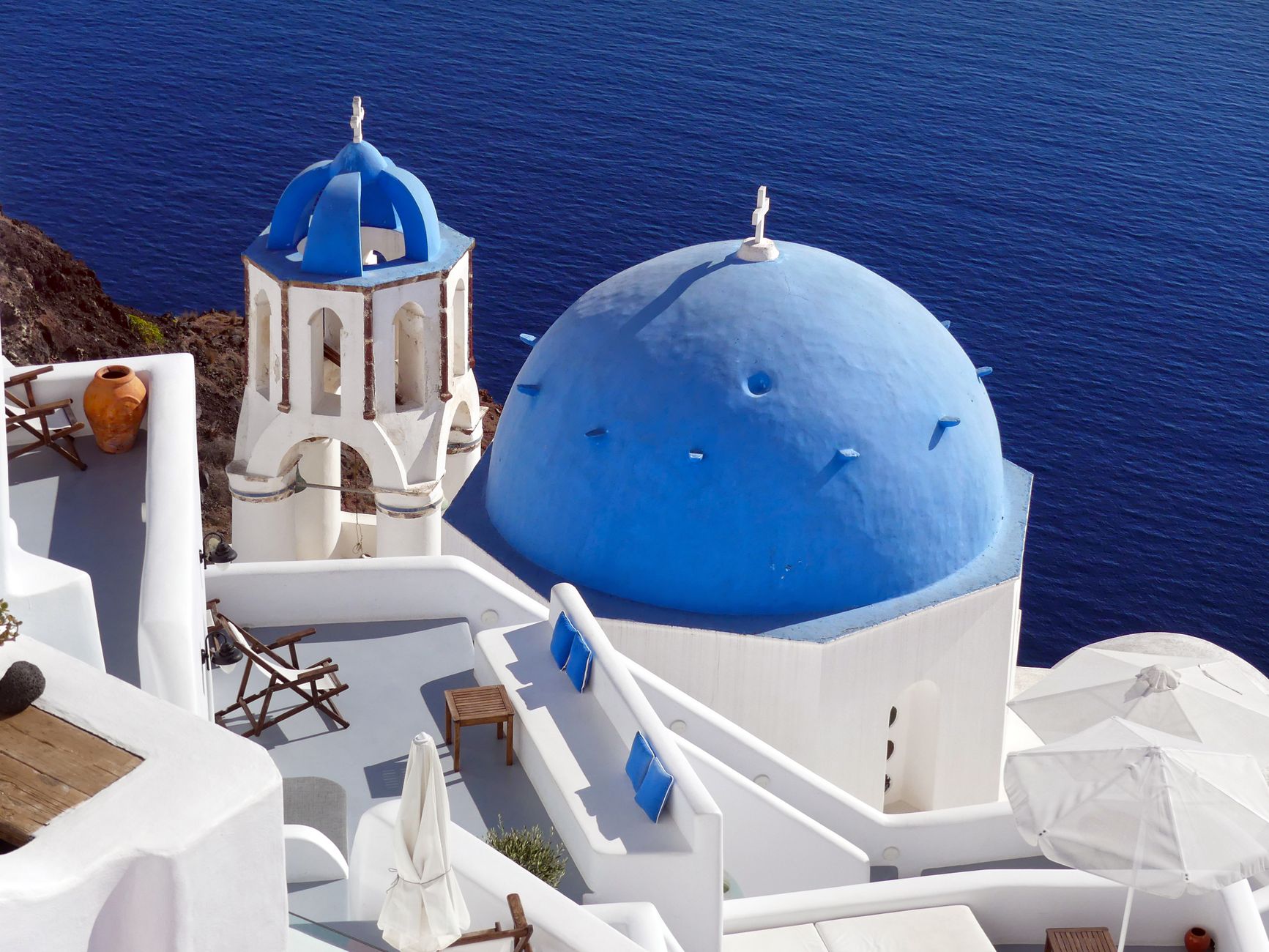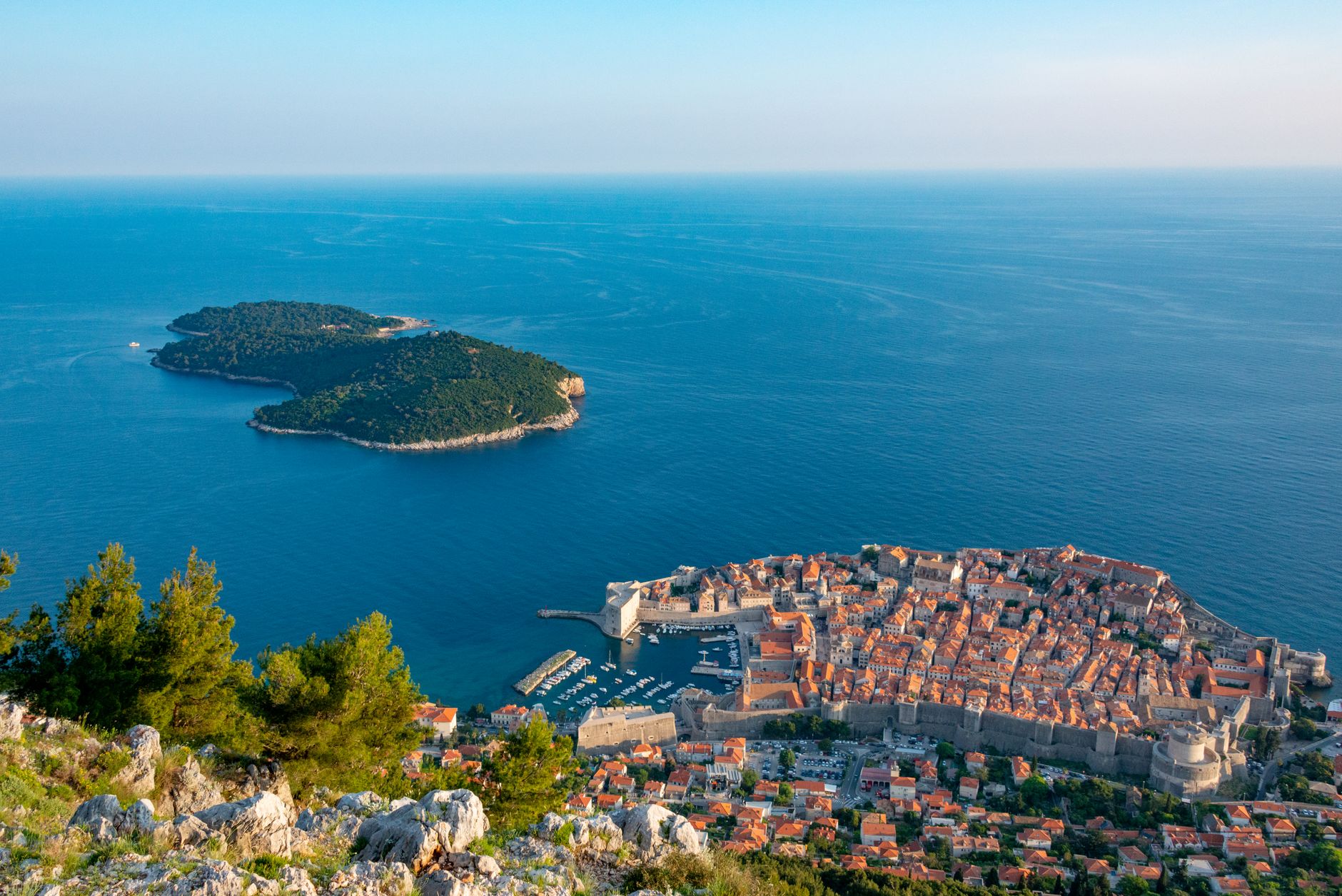
Croatia has a way of arriving in your memory fully formed, like a photograph you didn't know you'd taken. The first glimpse of Dubrovnik's city walls from the sea. The scent of lavender drifting across the water as you approach Hvar. The shock of entering the Blue Cave on Biševo — that impossible, luminous blue light filling a chamber of rock. These are not experiences you have to search for. Along the Dalmatian Coast, they simply happen.
Dubrovnik: Where the Journey Begins
There is no more dramatic place to begin a gulet charter than Dubrovnik. Approaching from the sea, the city reveals itself as a medieval stage set: honey-coloured walls plunging into the Adriatic, terracotta rooftops packed tight within the fortifications, the green dome of the cathedral rising above it all. It is a place that has survived earthquakes, sieges, and the pressures of modern tourism with its dignity intact.
Walk the city walls at dawn, before the day-trippers arrive, and you understand why this place has captivated visitors for centuries. The Stradun — the polished limestone main street — gleams in the early light. Below the ramparts, locals swim off the rocks at Buža, where a cliffside bar serves cold drinks through a hole in the city wall. In the evening, the old harbour fills with the gentle sound of conversation, and you dine on black risotto made with cuttlefish ink at a table where the candle flame barely flickers in the still air.
Hvar: Lavender, Stone, and Starlight
Sailing north-west from Dubrovnik, the Dalmatian islands begin to assert themselves. There are over a thousand of them — a scattering of rock and pine stretching along the coast like a broken necklace. Hvar is the most celebrated, and with good reason.
Hvar Town itself is impossibly picturesque: a renaissance square, a Venetian fortress on the hill above, and a harbour lined with sleek yachts and centuries-old stone buildings now housing excellent restaurants and cocktail bars. It has energy and sophistication without ever feeling forced. But the real magic of Hvar lies beyond the town — in the interior, where dry-stone walls divide fields of lavender that bloom in June and July, filling the air with a fragrance so intense it seems to have weight.
To sail the Dalmatian Coast is to understand that the Mediterranean is not one place but many — and that Croatia may be its best-kept secret.
The Pakleni Islands, just off Hvar's south-western shore, are a gulet captain's paradise. This small archipelago of pine-covered islets shelters some of the most beautiful anchorages on the Adriatic. Palmižana, the largest, has a bohemian restaurant set among a sculpture garden, where you eat grilled fish beneath the pines with your feet in the warm stone.
The Secret Islands: Vis and Biševo
If Hvar is Croatia's elegant drawing room, Vis is its wild garden. The furthest inhabited island from the mainland, Vis was a Yugoslav military base until 1989, closed to tourists for nearly fifty years. That enforced isolation preserved something rare: an island that feels genuinely untouched.
Komiža, on the western shore, is a fishing village of extraordinary beauty — a crescent of stone houses around a harbour where the boats are still painted in the traditional colours. The island's interior is a patchwork of abandoned vineyards, ancient stone walls, and olive groves that have been producing oil since the Greeks founded a colony here in the fourth century BC.
From Vis, it is a short sail to the tiny island of Biševo and the Blue Cave — the Modra Špilja. Timing is everything: between ten and noon on a calm day, sunlight enters through an underwater opening and refracts off the limestone floor, filling the cave with an unearthly, electric blue light. It lasts only minutes, and it is one of the most beautiful natural phenomena in the Mediterranean.
Mljet: Nature's Cathedral
Mljet is the island that stays with you longest. Two-thirds of it is national park — a landscape of dense Mediterranean forest, rocky coastline, and two extraordinary saltwater lakes connected to the sea by narrow channels. The water in the lakes is warmer than the open Adriatic and so saline that you float almost effortlessly.
On a small island in the centre of the larger lake stands a twelfth-century Benedictine monastery, now partly converted into a restaurant. You reach it by small boat, crossing water that shifts from jade to turquoise depending on the angle of the sun. It is one of those places where time seems to fold in on itself — where you could be in any century, where the only sound is birdsong and the lap of water against stone.
When to Go
The Croatian season runs from May to September. July and August bring the warmest weather and the liveliest atmosphere — Hvar in particular comes alive — but also the busiest anchorages. June is arguably the finest month: the lavender is in bloom, the water is warm enough for long swims, and the islands have a freshness that fades in the heat of high summer. September brings softer light, fewer boats, and a coastline that feels like it belongs to you alone.
Croatia rewards the curious. Sail past the obvious stops and you will find bays where the only other visitors are a family of goats on the hillside. Drop anchor in a cove on the south side of Korčula and swim to a beach that has no name. Order wine from a konoba where the owner pours his own vintage and tells you the story of every vine. This is the Dalmatian Coast at its finest — unhurried, unspoilt, and utterly unforgettable.