Greece does something to the light. Painters have tried to capture it for centuries — that particular quality of luminosity that makes the whitewashed walls of a Cycladic village glow as if lit from within, that turns the Aegean into a sheet of hammered silver at midday and molten gold by evening. To sail these waters aboard a gulet is to move through a landscape that feels less like geography and more like a living painting.
The Light That Changes Everything
It begins, perhaps, at dawn. You are anchored in a quiet bay — the exact location matters less than the moment — and the first light catches the eastern cliff face, turning bare rock into warm amber. The water beneath the hull is so transparent you can count the pebbles on the seabed four metres below. A fisherman passes in a small boat, raising a hand in greeting. The smell of coffee drifts up from the galley. Greece, you realise, is not a destination. It is a state of mind.
The Greek islands number in the thousands — over six thousand, of which perhaps two hundred are inhabited. This staggering archipelago stretches from the Ionian Sea in the west to the Turkish coast in the east, from the northern Sporades to the southernmost tip of Crete. A gulet charter allows you to thread through them at your own pace, discovering the character of each island as it reveals itself from the water.
Beyond Santorini and Mykonos
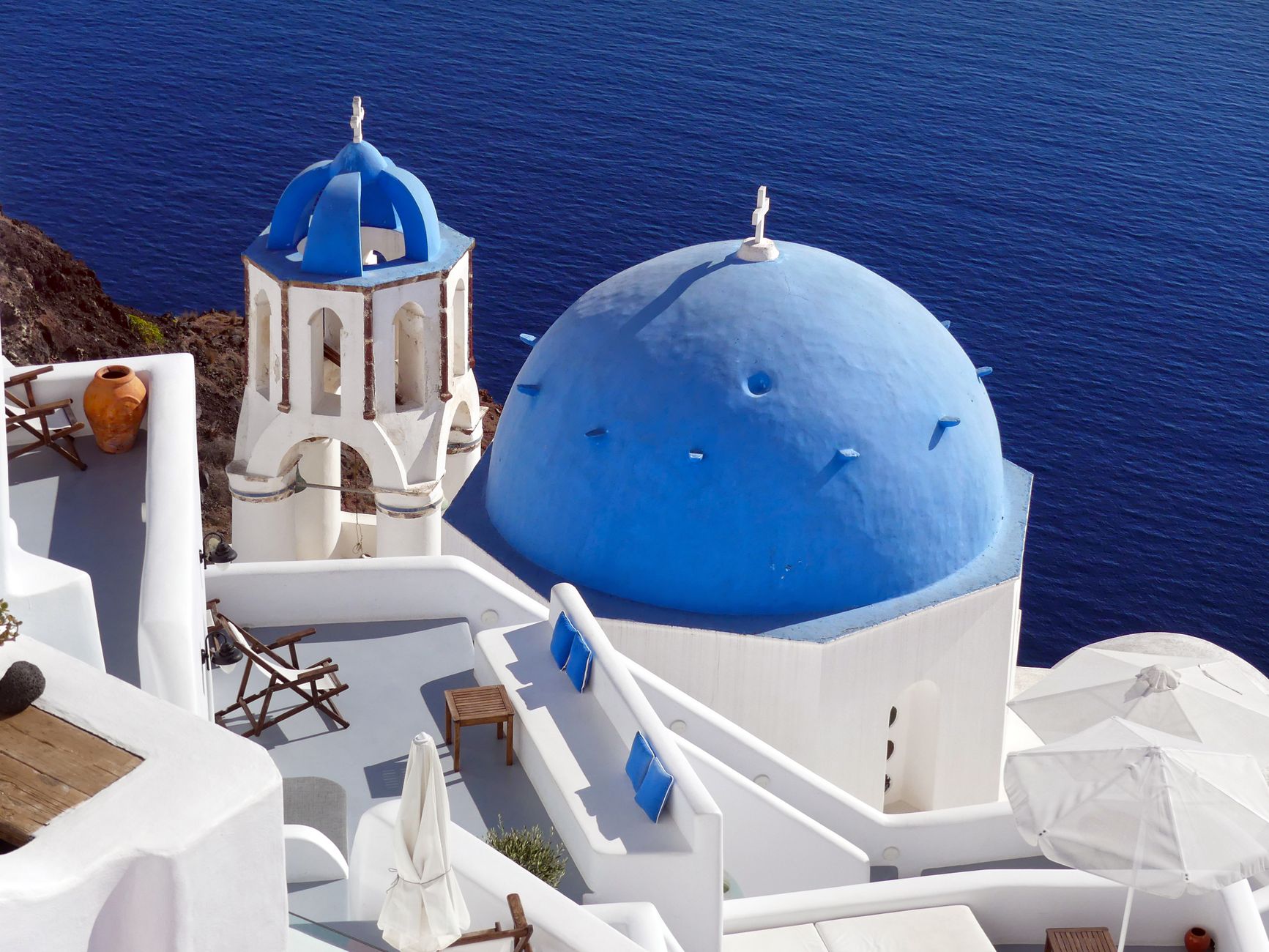
Santorini is, of course, extraordinary. The caldera — a vast, flooded volcanic crater — is one of the most dramatic natural formations in the Mediterranean. Arriving by gulet, you see the full theatre of it: the sheer cliffs rising three hundred metres from the water, crowned by the tumbling white villages of Fira and Oia. At sunset, the entire western face of the caldera turns rose and copper, and the silence is punctuated only by the distant sound of church bells.
Mykonos, too, has earned its reputation. The labyrinthine streets of Chora, the iconic windmills on the ridge above the harbour, the beach clubs and late-night bars — it is the Mediterranean at its most glamorous. But to visit only these two islands is to read only the cover of a very long and fascinating book.
The Greeks have a word — meraki — that means doing something with soul, with love, with a piece of yourself woven into it. It is the secret ingredient in every taverna meal, every hand-painted doorway, every conversation that lasts long into the warm night.
The Dodecanese: Greece's Quiet Side
Sail south-east from the Cyclades and the character of the islands changes. The Dodecanese — literally "twelve islands," though there are in fact eighteen major ones — lie close to the Turkish coast and carry a different history. Rhodes, with its medieval Old Town encircled by massive fortifications, feels like stepping into a crusader epic. But it is the smaller islands that steal the heart.
Symi is a revelation. Its harbour — Gialos — is one of the most photographed in Greece, a perfect horseshoe of neoclassical mansions painted in ochre, terracotta, and faded blue. The town climbs the hillside in a cascade of colour, and the waterfront tavernas serve some of the freshest seafood in the Aegean. Tiny Halki, just beyond, has a single village, a single harbour, and a profound, almost meditative stillness.
Patmos is something else again — a place of deep spiritual significance. The Monastery of St. John the Theologian crowns the island like a fortress, and the Cave of the Apocalypse, where Saint John is said to have received his visions, draws pilgrims from across the world. Yet Patmos is also simply beautiful: its coastline is dotted with small, sheltered beaches, and the evening light on Skala harbour is unforgettable.
Taverna Culture and Island Gastronomy
Greek food aboard a gulet is generous, sun-drenched, and deeply satisfying. Expect long tables laden with small plates — grilled halloumi, charred octopus dressed in vinegar and capers, spanakopita still warm from the oven, fat tomatoes sliced and scattered with oregano and crumbled feta. The olive oil is local and extraordinary, poured with a liberality that would make a northern European blink.
Ashore, the taverna remains the heart of island life. The best ones are often the simplest — a few tables on a harbour wall, a handwritten menu, a kitchen where someone's grandmother is presiding over the stove. Order the catch of the day, a carafe of the house white, and a plate of whatever the kitchen has made that morning. You will eat better than in most fine-dining restaurants, and pay a fraction of the price.
When to Go
The Greek sailing season stretches from May to October. The Meltemi — the strong northerly wind that sweeps through the Aegean — blows most consistently in July and August, which brings excellent sailing conditions but can make some anchorages uncomfortable. June and September offer the ideal balance: warm seas, gentle breezes, and islands that have not yet reached peak season. May and October are cooler but beautifully quiet, with wildflowers carpeting the hillsides in spring and the sea still warm enough for swimming well into autumn.
Wherever you go, and whenever you go, the Greek islands deliver something that no amount of planning can guarantee: the feeling of spontaneous joy. A perfect bay discovered by chance. A conversation with a fisherman that leads to the best meal of the trip. A sunset so beautiful it renders everyone on board briefly, wonderfully silent.